
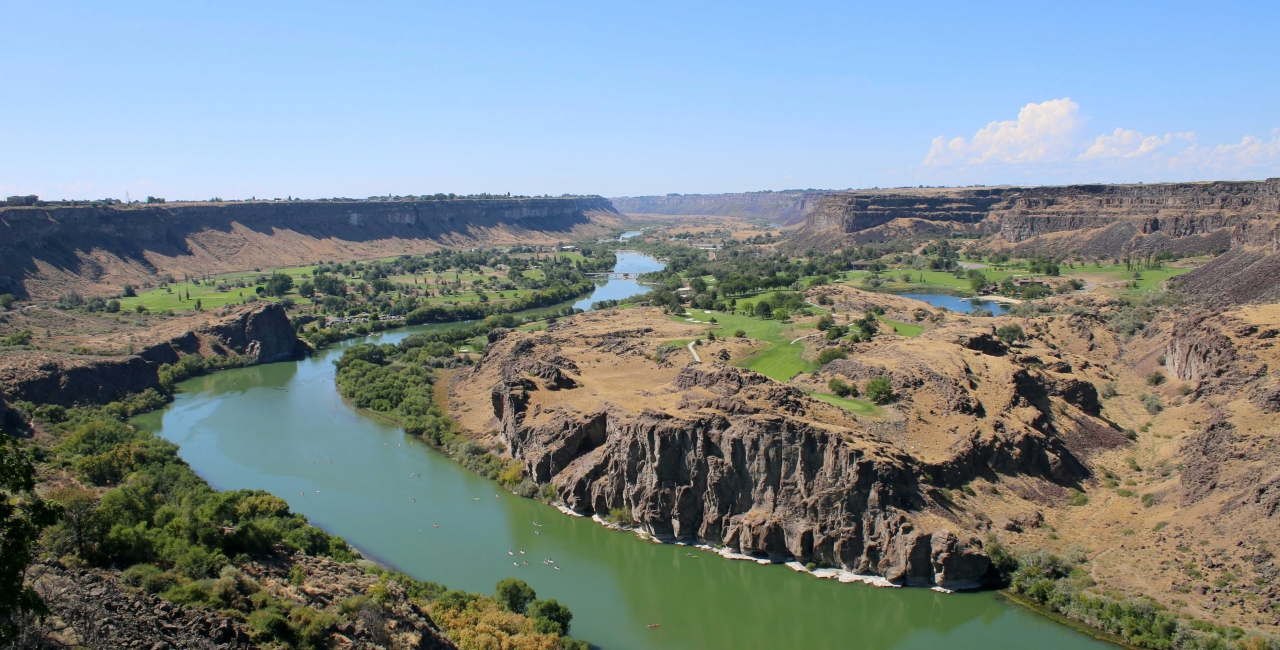
As droughts become more frequent and severe in many parts of the world, rivers that carry vital goods are becoming increasingly difficult to navigate. Falling water levels can force vessels to reduce their cargo, disrupt ports and supply chains, raise logistics costs and, in some cases, cut off communities from essential goods and services, says a new Factsheet from the International Transport Forum.
The challenge is global. Major rivers including the Rhine and Danube in Europe, the Amazon in South America and the Yangtze in China have all experienced periods of severe low water that have disrupted navigation. Climate projections indicate that hydrological droughts are expected to increase in many large regions of the world.
When rivers can no longer carry the load
River transport is particularly vulnerable to drought because even relatively small changes in water levels can sharply reduce the amount of cargo a vessel can carry.
During severe low-water conditions, barges on the middle Rhine have operated at only around 15% of their normal cargo capacity, while vessels on the Danube have operated at around 30%. Similar constraints have affected navigation on the Amazon and Yangtze.
When vessels carry less cargo, more journeys and more vessels are needed to move the same volume of goods. But additional capacity is not always available. Freight rates can rise sharply as operators compete for limited capacity, adding costs and uncertainty for businesses dependent on river transport.
The consequences extend well beyond the river itself. Ports can become congested when cargo cannot be moved onward, while goods may remain in storage for longer or vessels may be unable to complete their return journeys. Supply chains that depend on river transport for raw materials and finished goods can face higher costs and delays.
The scale of the disruption can be significant. Low water on the Rhine in 2018 was associated with a 0.4% decline in German GDP, while German industrial production has been estimated to fall by around 1% during a month with 30 days of low water.
For communities that rely directly on rivers, the consequences can be even more immediate. Severe droughts on the Amazon in 2005, 2010 and 2016 disrupted inland navigation and isolated local populations, limiting access to food, fuel, medicines and essential services including healthcare and education.
There is no simple alternative
When rivers become difficult to navigate, shifting freight to other modes can help - but alternatives also have limits.
Freight rail can provide an important alternative, but rail networks may already be operating close to capacity and can themselves be affected by extreme weather. Moving large volumes of freight by road can require substantial additional capacity: a 1,500-tonne barge carries the equivalent of around 60 trucks carrying 25 tonnes each.
This makes multimodal flexibility increasingly important. Supply chains that can switch between waterways, rail and road are better positioned to respond when drought makes one transport mode less reliable.
Preparing for more difficult conditions
Governments and businesses are already using a range of measures to reduce the impact of low water.
Better forecasting and early-warning systems can give transport operators more time to adjust. In Germany, for example, forecasts provide information on water levels on the Rhine, Danube and Elbe up to six weeks ahead. Other measures aim to conserve water in rivers and canals by reducing water losses at locks.
Vessel design can also make a difference. Ships designed to operate in shallow water can continue carrying freight when conventional vessels have to reduce their loads. Following the 2018 Rhine low-water crisis, BASF doubled the number of vessels in its fleet capable of operating in low-water conditions.
Water-management measures can help maintain navigable levels during dry periods. The Netherlands and Belgium retain water during wetter periods for use during dry conditions, while China has released water from upstream reservoirs to support navigation on the Yangtze during severe drought. Dredging can also improve navigation on selected stretches, although it is not necessarily a long-term solution to increasingly frequent drought.
Businesses can also prepare by securing longer-term agreements with low-water-capable barge operators, increasing storage, adjusting sourcing, building inventories or expanding production at facilities that are less dependent on waterways.
Resilient river transport needs resilient supply chains
There is no single solution to the disruption caused by drought. The scope for governments to maintain navigation during extreme low-water conditions can be limited.
The most effective response may therefore be to give supply chains more options. Maintaining viable connections between inland waterways, rail and road can allow freight to move when drought makes one mode temporarily unavailable.
As climate change increases pressure on freshwater resources in many regions, the ability to switch between transport modes - and to prepare before disruption occurs - will become increasingly important for keeping goods, essential supplies and economies moving.
ITF Resources:
- Droughts and River Transport (ITF Factsheet, September 2026)
- Transport Network Resilience to Critical Events Working Group (2026)
- Transport System Resilience (2024)
- Adapting Transport to Climate Change and Extreme Weather (2016)
- ITF 2027 Summit on Governing Resilient Transport